
BSNA News
BSNA joins global colleagues to welcome the new global standard on follow-up formula for older infants and products for young children
BSNA joins with our colleagues at International Special Dietary Foods Industries to welcome the revision of the new global Standard for Follow-up Formula (CXS-156-87) set by Codex Alimentarius.
Continue reading
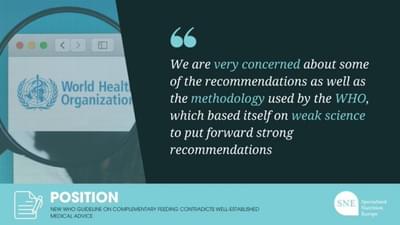
SNE statement on World Health Organization Guideline for complementary feeding of infants and young children
Specialised Nutrition Europe (SNE) has expressed concern about certain recommendations and the methodology employed by the WHO in their Guideline on complementary feeding in a newly released statement
Continue reading
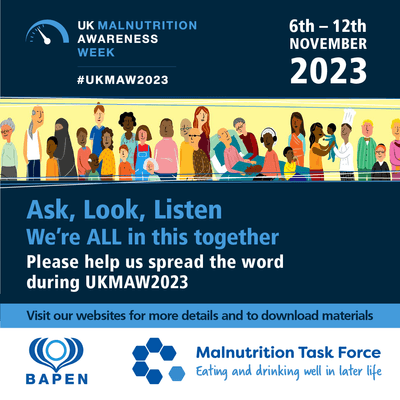
Making disease-related malnutrition a priority for health and social care in the UK and worldwide – Malnutrition Awareness Week 2023
This week marks Malnutrition Awareness Week 2023 (6-12 November), led by the Malnutrition Taskforce and BAPEN, promoting the message that it is easier to manage malnutrition (or dehydration) when it is spotted earlier. This Malnutrition Awareness week BSNA supports the call for greater priority to be given to identifying and managing malnutrition, to mitigate the serious consequences for patients and reduce huge costs for health and social care.
Continue reading
Industry Response to The Lancet Series on Breastfeeding - Ensuring access to optimum nutrition requires a holistic approach
In a joint letter to the editor of The Lancet published today (4 August), the Secretary Generals of International Special Dietary Foods Industries (ISDI) and Specialised Nutrition Europe (SNE) emphasise that a holistic approach is required to increase breastfeeding rates, including strengthening maternity leave, workplace policies and funding.
Continue reading

Celebrating Dietitians Week 5-9 June 2023
This week is Dietitians Week (5-9 June) - an opportunity to reflect on the importance of dietitians and why they are central to tackling malnutrition in the UK. We support the British Dietetic Association's work to promote the work and value of the dietetic workforce.
Continue reading
Job opportunity: Secretary General of International Special Dietary Foods Industries Association (ISDI)
ISDI is recruiting a new Secretary General to provide strategic leadership for the association's activities and proactively represent the collective voice of the global special dietary foods industries to decision makers (including WHO and Codex) and key stakeholders.
Continue reading
BSNA welcomes Nutrition and Hydration Week 2023 – How to reinforce, focus and energise around good nutritional care
BSNA is delighted to welcome this year’s Nutrition and Hydration Week – the annual opportunity to promote understanding of the importance of nutrition and hydration in health and social care.
Continue reading

BSNA response to 2023 Lancet Series on Breastfeeding, including the influence of commercial milk formula marketing
Following the the launch of the 2023 Lancet Series on breastfeeding today (8 February 2023) BSNA member companies have commented to state their support for the World Health Organization (WHO) Code and agreement that breastfeeding is important for infant health. BSNA members protect and promote breastfeeding.
Continue reading
Home Artificial Nutrition Week 2022 -explaining the role of medical foods like Oral Nutritional Supplements (ONS) or enteral tube feeds
As part of a new series, BSNA has launched the first of its videos on the sectors we represent, looking at medical foods including enteral tube feeds. Thousands of people in the UK rely on home enteral feeds to meet their nutritional needs.
Continue reading

All about BSNA - new video explains all about the sectors represented by BSNA.
BSNA has launched a new video giving a summary of all the sectors represented by the association and what roles and activities that involves. Sector specific videos will also be launched to give a more detailed insight into infant nutrition, medical and parenteral nutrition and the commercial compounding.
Continue reading